Friday, November 30, 2007

Week 13: November 26 - 30

This week's Bible lesson and verse: Jesus is Baptized
"And a voice from Heaven said, 'This is my beloved Son, and I am fully pleased with Him." Matthew 3:17


-----------------------------------------------------------------

This week in science: Creating New Life

Noah learned that some animals can reproduce by splitting, breaking down or budding from themselves while others need a partner. This week we studied the animals that hatch from eggs and we watched a video of a chick hatching.


Be patient . . . this takes 10 minutes!
-------------------------------------------------------------

READING: exerpts from the BIBLE
the Amorites, Hittites and the City of Babylon


--------------------------------------------------------------
History and Geography:

The Babylonians : c2000BC-1600BC
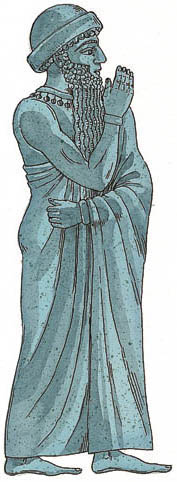
Person of Interest: Hammurabi c1810BC - 1750BC


Mapping Hammurabi's Empire
Hammurabi's laws
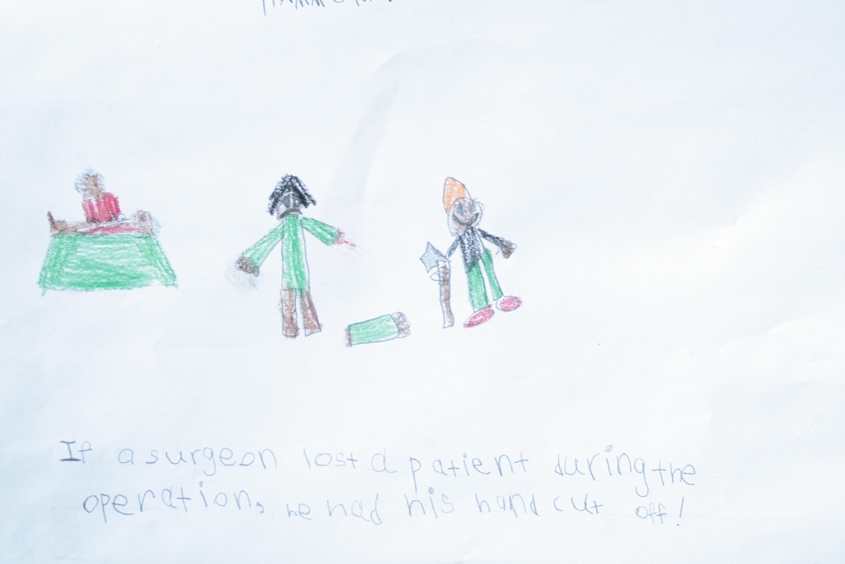

Of the three laws we learned about today, Noah chose this one to illustrate: If a surgeon carried out an operation that killed a patient, he had his hand cut off.


* gods and legends : Their most important god Marduk saved the world from a terrifying sea monster. They believed he created the world by building a huge raft on the ocean and pouring dust on top of it.


The end of the Empire: Hammurabi died, his Empire grew weaker and after the Hittites invaded, the Empire collapsed.


The Hittite Empire - c2000BC - 1200BC


Mapping the Hittite Empire


Kings, wars and warriors: The Hittite warriors were tough, riding into battle in war chariots and carrying iron weapons which were stronger than the bronze weapons used by their enemies. The greatest Hittite king was Shuppiluliuma.


gods: many, but the chief god was Teshub - he was to have controlled the weather


The end of the Hittites came when the Sea Peoples raided. Some Hittites survived in Syria, but the Empire collapsed.


---------------------------------------------------------------

This week in Math : more single digit addition

Friday, November 23, 2007

Week 12: November 19 - 23

Bible lesson and verse: No adventure club this week because of Thanksgiving and it is a lighter week all around. We will continue lessons but not all subjects.

---------------------------------------------------------

This week in History and Geography:

The Mycenaeans c 1600BC - 1200BC

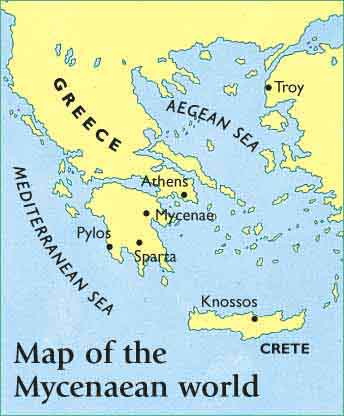
Mapping the Mycenaean World: 2000 BC The Mycenaeans settle in Greece
1600 -1200BC The Mycenaeans are rich and powerful


Palaces and Tombs

This is what the city looked like. The palace contained:

*Workshops for metalworkers, potters and weavers. Some of the things they made were traded abroad.

*Offices where scribes kept record of all the good stored in the palace. They wrote on clay tablets using Linear B writing


*Bathrooms: the tubs were stone and the water had to be scooped away with a jug and poured out. The water was perfumed with fine oils for the nobility.


*Beehive tombs and treasure: The first graves were 40 foot pits. Later graves were "beehive" tombs made of mounded earth. The shaft graves were harder to rob, so a lot of the grave treasures have survived.
This is a golden funeral mask found in a grave shaft at Mycenae.


Trade


Mycenaean traders sailed as far as Egypt and Italy. They bought ivory and precious metals in exchange for wine, olive oil, weapons, pots and bowls.


Warriors


1450 BC Mycenaean warriors sailed to Crete and took control of the palace and Knossos. They also took over the Minoans sea trade and became the leading traders in the eastern Mediterranean.


Legend The Siege of Troy 1250 BC

Paris, prince of Troy, fell in love with Helen, the beautiful wife of a Mycenaean king, Agamemnon. Paris took Helen off to Troy so the angry Agamemnon attacked the city and kept is surrounded for 10 years. One day the Mycenaean soldiers left a large wooden horse outside the walls of Troy and pretended to sail away. The Trojans thought the horse would bring them good luck and brought it into the city. That night, Mycenaean soldiers who were hiding inside the horse climbed out. They opened the city walls, letting in the rest of their army and they destroyed Troy. Helen was sent back to Agamemnon.

The end of the Mycenaeans
by 1200 BC After several years of bad harvests, the people started attacking each other's cities, stealing their crops and cattle. Some even left Greece to search for new homes and their cities were gradually abandoned.

Friday, November 16, 2007

Week 11: November 12 - 16

Bible: Review of the last three weeks

The Three Wise Men
Jesus Grows Up
John the Baptist


Noah said his favorite verse was Luke 2:52 "And Jesus grew in wisdom and stature and in favor with God and men," because it shows Jesus was a boy like him!


---------------------------------------------------------------------
This week in science: Animal Senses
*Hearing in bats and dolphins


*Vision
How insects compound lenses work.


*Nocturnal animals - how can they see in the dark?


*Eye position and field of vision


Here is another link for amazing facts


--------------------------------------------------------
History and Geography : The Minoans: c2500BC-1450BC
Mapping Crete

The legend of King Minos: According to Greek legend, the god Zeus fell in love with a beautiful princess called Europa. He turned himself into a bull and swam to Crete with the princess on his back. King Minos of Crete was one of Princess Europa's sons. The Minoans take their name from King Minos who ruled the island.


The legend of the Minotaur: half man, half bull the Minotaur was to have lived in a huge maze under the palace at Knossos. A young Greek prince called Theseus set out to kill it. King Minos' daughter gave the young prince a magic sword and a ball of thread. Theseus unwound the thread as he went deeper into the maze, leaving a trail behind him. After killing the Minotaur, he followed the thread back to the outside world.


Life on Crete
*Travel and Trade
*Religion
*Writing: Linear A


The end of the Minoans: possibly a natural disaster weakened the land and the people and left them compromised making it easier for the invading Mycenaeans from Greece to conquer them. They never recovered and eventually died out.


--------------------------------------------------------------

ART: Fresco
We studied the wall paintings of the Minoans and then Noah painted his own Fresco


I spread spackling on a sheet of paper and had Noah paint with watercolor while the spackling was still damp. When it dried, we had a beautiful stiff fish Fresco.
Below it : more Minoan art

----------------------------------------------------------------------
Math: Reviewing single digit addition & subtraction
Identifying and making patterns

Friday, November 9, 2007

Week 10: November 5 - 9

This week's Bible verse: "Obey God because you are His children." I Peter 1:14
John the Baptist

-----------------------------------------------------------------

This week in Science: Internal Balance and Sending Messages


*Body Temperature

- - terms: warm blooded, cold blooded
we connected to a link discussing a day in the life of a lizard
and studied ways animals warm up and cool down
*Water Balance
*Liver and Kidneys
- - terms: liver, urea, kidneys, urine, bladder

Sending Messages:

*Color coding
- - examples: cinnabar caterpillar's orange and black stripes warn that he is poisonous
butterflies - the African monarch butterfly is poisonous, but predators will also leave the Swallowtail butterfly alone because its coloring mimics the monarch.

*Body language (the dance of the bee, importance in the pack)
*Making noises (birds, grasshoppers, crickets: calls of warning, or to attract a mate)
*Chemical messages to attract a mate or mark their territory


----------------------------------------------------------
History & Geography: Europe c6000BC - 3000BC

Mapping Europe
First Villages

*farmers
*homes
*temples and tombs

Northern Europe c3200BC-1500BC
The Monument Builders
*Stonehenge
*Mastering Metal
*Tombs and treasure

Friday, November 2, 2007

Week 9: October 29 - November 2

This week's memory verse: Luke 2:52 "And Jesus grew in wisdom, and stature and in favor with God and men."
(Same verse as last week because there was no adventure club last week, so we stayed on the same lesson.)


U.S. History: This is not really the year that we will be studying U.S. History as a regular subject, but we are making it an occasional study. This will be a fairly long project I think. We will be memorizing the meaning of the pledge of allegiance. Here I've written the whole thing out.

I Pledge Allegiance - I Promise to be faithful and true (Promise my loyalty)
to the flag, to the emblem that stands for and represents
of the United States all 50 states, each of them individual, and individually represented on the flag
of America yet formed into a UNION of one Nation.
and to the Republic - And I also pledge my loyalty to the Government that is itself a Republic, a form of government where the PEOPLE are sovereign,
for which it stands, this government also being represented by the Flag to which I promise loyalty.
one Nation under God, These 50 individual states are united as a single Republic under the Divine providence of God, "our most powerful resource" (according to the words of President Eisenhower)
Indivisible, and can not be separated. (This part of the original version of the pledge was written just 50 years after the beginning of the Civil War and demonstrates the unity sought in the years after that divisive period in our history)
with Liberty The people of this Nation being afforded the freedom to pursue "life, liberty, and happiness",
and Justice And each person entitled to be treated justly, fairly, and according to proper law and principle,
for All. And these principles afforded to EVERY AMERICAN, regardless of race, religion, color, creed, or any other criteria. Just as the flag represents 50 individual states that can not be divided or separated, this Nation represents millions of people who can not be separated or divided.
--------------------------------------------------------

History: The Indus Valley People c2500BC - 1500BC


Mapping the Indus Valley in South Asia


food, crafts, trade and the city of Mohenjo-daro. Here, Noah is working with cotton. He learned that the Indus Valley farmers were the first people to grow cotton and weave it into cloth.


The end of a civilization

------------------------------------------


This week in Science: Breathing


Breathing in water: fish and how their gills function


Breathing in water and on land: amphibians


How the lungs work to exchange oxygen and carbon dioxide


How insects breathe: through holes in their bodies


--------------------------------------------

Friday, October 26, 2007

Week 8: October 22- 26

This week's Bible verse: "And Jesus grew in wisdom, and stature and in favor with God and men." Luke 2:52
Jesus grows up
---------------------------------------------------------------
This week in History: The Egyptians c3100BC - 1700BC
Mummies and Pyramids

Tomb treasure

The Great Pyramid

mummification - This lesson was so much fun. We linked to some Usborne sites from our chapter on Egypt, and toured King Tut's tomb, studying the pictures painted on the interior walls. These pictures are treasured art to us now, but back then they were actually left as maps, leaving directions for the deceased Kings as they traveled through to the next life. Then I wrapped Noah as a mummy and took his picture so he could see what he looked like. He was so interested in the whole process. He especially wanted to know how the ancient 'doctors' removed the brains - through the nose of course!


He was anxious to get out of the wraps though.

Person(s) of interest - Cheops, Pharaoh of Egypt c2589BC - 2566BC pronounced key-ops; also Khufu in Greek
The Great Pyramid was made for him . . . or was it?


Mapping Egypt

----------------------------------------------------------------------

This week in Science: Teeth & Digestion

Meat eaters - carnivores (Lions) Plant eaters - herbivores (Giraffe) and the all purpose teeth of the omnivores (monkeys)

kinds of teeth: canines, carnassials, incisors, permanent teeth, premolars, molars. Other animals referenced: sharks, cows, and deer

Digesting plants; we learned about the special digestion system of rabbits and cows (Noah was surprised to learn that cows have 4 stomachs!)

Digestion in birds - some birds eat small rocks to help them crush the seeds and some birds swallow their food whole, coughing up pellets of indigestible fur and bone.

-----------------------------------------------------------------------
MaTh We're still working with money, learning denominations and how many coins of each kind go into a dollar - this is also an easy way to introduce the concept of fractions. Also reviewing counting by 5s and 10s


We work on Spelling words whenever we're in the car

Friday, October 19, 2007

Week 7: October 15-19

This week's Bible verse: "Seek the Lord while He may be found." Isaiah 55:6
The Three Wise Men

More nature study. This is the best time of year, at least I think so . . . but then I find beauty in Winter, Spring and Summer too! Noah was given a Salamander for his birthday so we have added the reptile to our lessons.
It's been interesting building him a suitable habitat. We read that yellow spotted salamanders are burrowers so we filled his aquarium with dirt, rocks and leaves and a little dish of water for soaking in. This is the time of year that he would be hybernating; he just dug right in and got comfy. They also eat worms, grubs and just about any insect, but so far we've provided him with tiny crickets to hunt and devour. Fortunately, they are so small and he is so addept at snapping them up in one gulp, that I haven't had to see anything disturbing. He seems happy for now and the kids love watching him so looks like he's here to stay for awhile. But they can live 20-30 years in the wild and even though that is much shorter in captivity, I don't know that we'll be keeping him that long.

We've been two days ahead, so Noah was able to close his books on his birthday.

We also began working for the Juan Manigault campaign this week by going door to door in our precinct. We took a brief survey whenever someone would come to their door and handed out brochures to anyone needing more information about our candidate. Noah and I spent about three and a half hours doing this so far discussing Christian citizenship and our responsibilities while walking.
This week in History: The Egyptians c5000BC - 1700BC
Mapping Egypt
Farmers of the Nile Valley
*crops, animals and the farmer's year
This week in science: Feeding, Food & Energy - we learned about the parts of the animal's mouth made for finding and devouring food, food chains, and how the body makes energy from the food. Noah's favorite was studying the grasshopper's mouth parts: the Mandibles for holding or biting, the Palps for tasting food and the Maxillae for pushing the food into the mouth. All of these were acted out of course . . . on each other.